Ar(%) is an input parameter used to calculate the bearing length.
Ar1(%) and Ar2(%) are input parameters used to calculate the reduction angle. Their positions in the measurement interface are shown below:
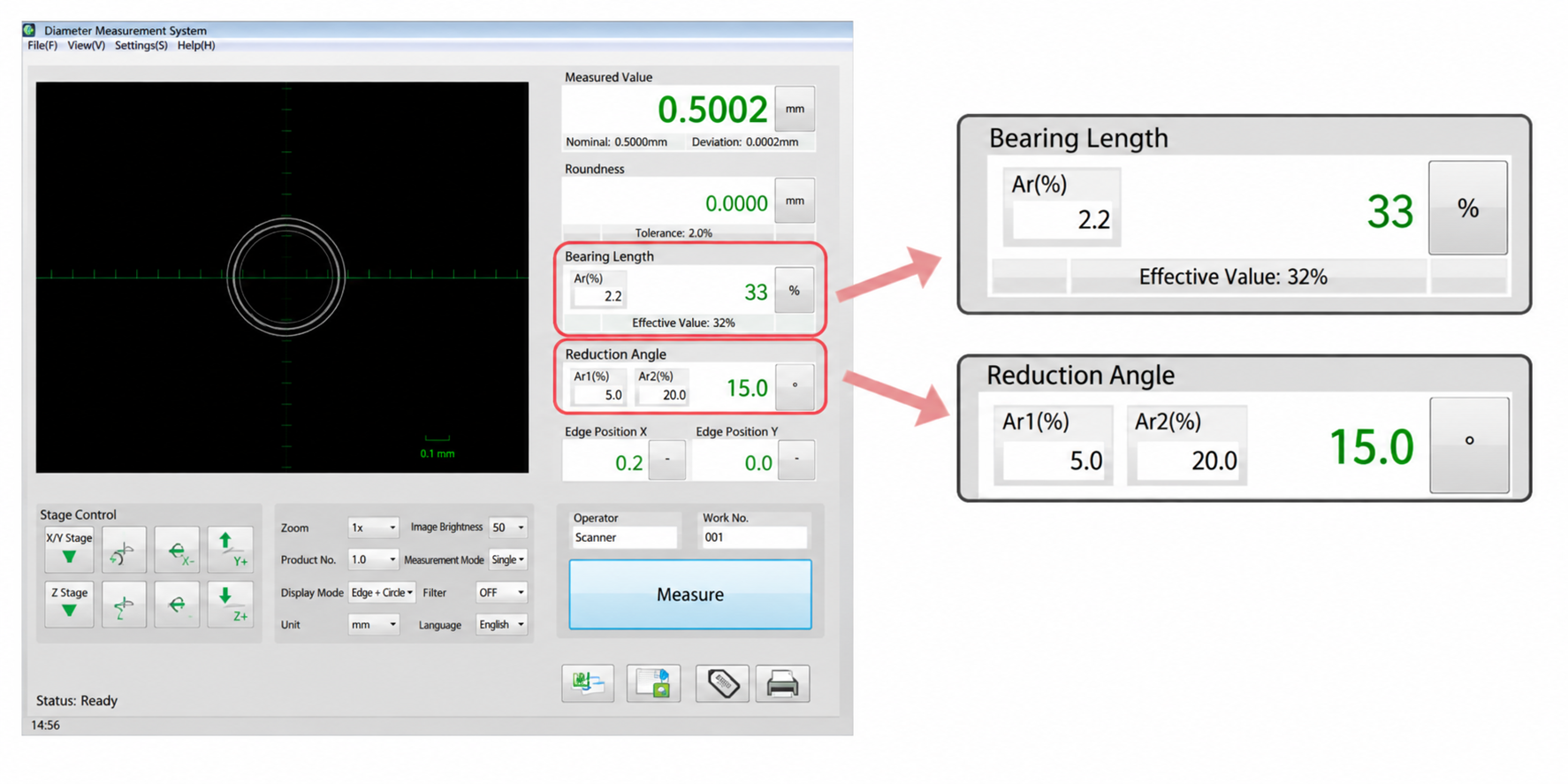
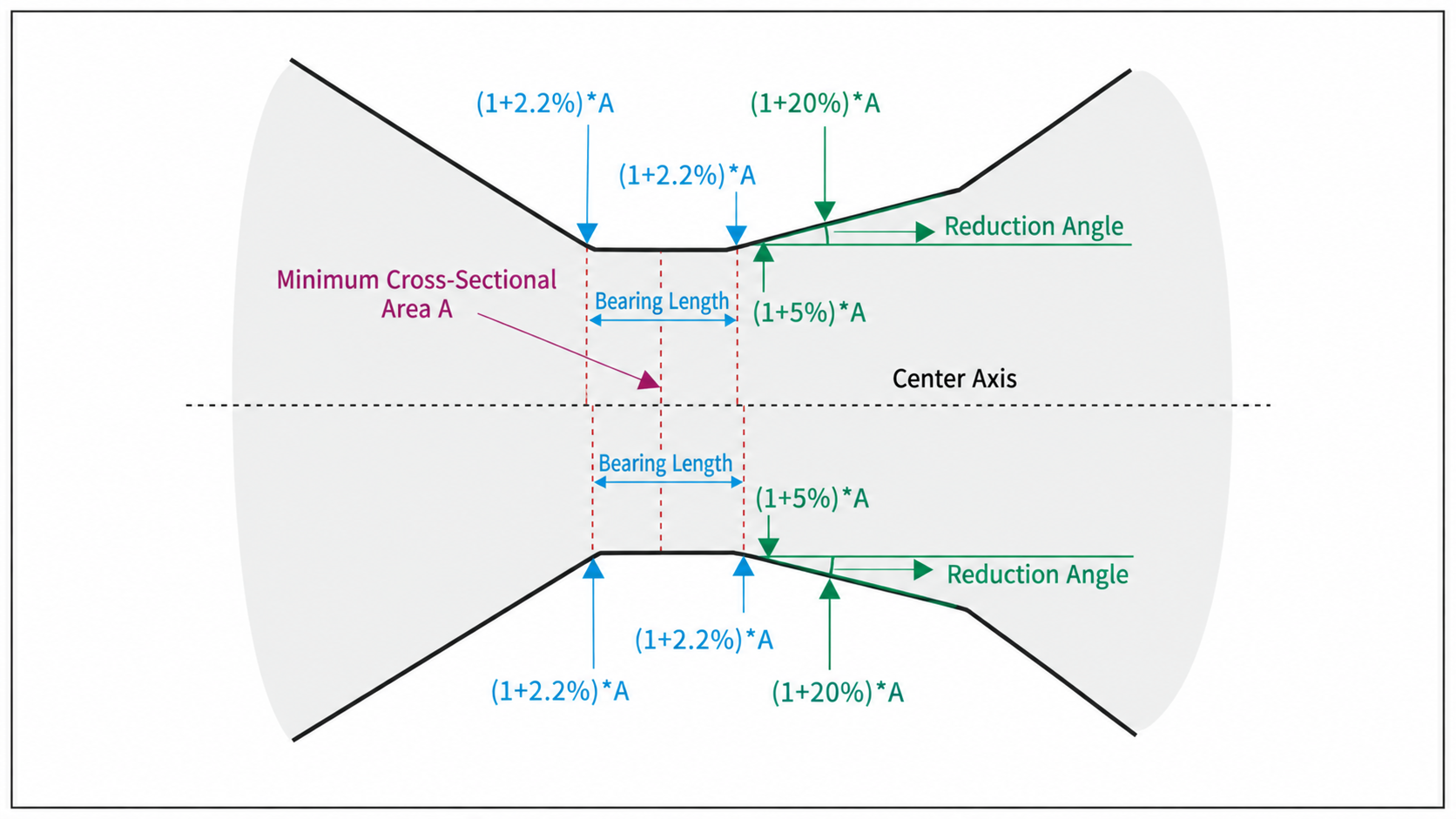
In the example above, Ar(%) = 2.2. This means the bearing length is calculated based on the position where the die bore cross-sectional area reaches (1 + 2.2%) × A, where A is the minimum cross-sectional area of the die bore.
Starting from the minimum area A (purple dashed line below), the area increases by 2.2%, creating two positions as indicated by the blue arrows. The calculated bearing length in this example is 33%.
Ar1(%) = 5.0 and Ar2(%) = 20.0. The reduction angle is calculated using the positions where the die bore cross-sectional area reaches (1 + 5.0%) × A and (1 + 20.0%) × A.
Starting from the minimum area A (purple dashed line below), the area increases by 5% and 20%, creating two positions shown by the green arrows. The calculated reduction angle in this example is 15°.
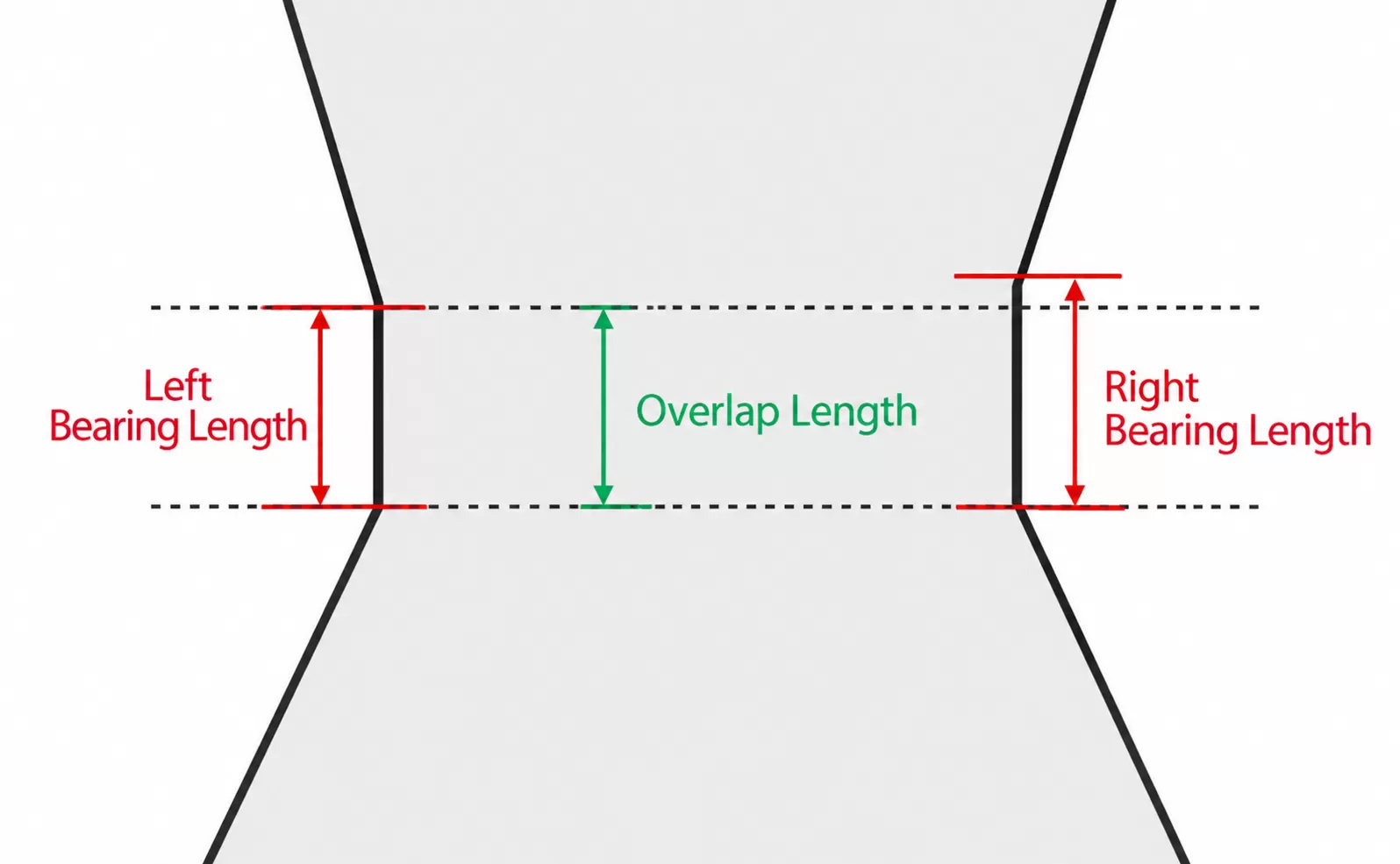
Note: The die bore cross-sectional area is calculated from the radius along the die center axis, so two bearing length values and two reduction angle values can be obtained.