













English
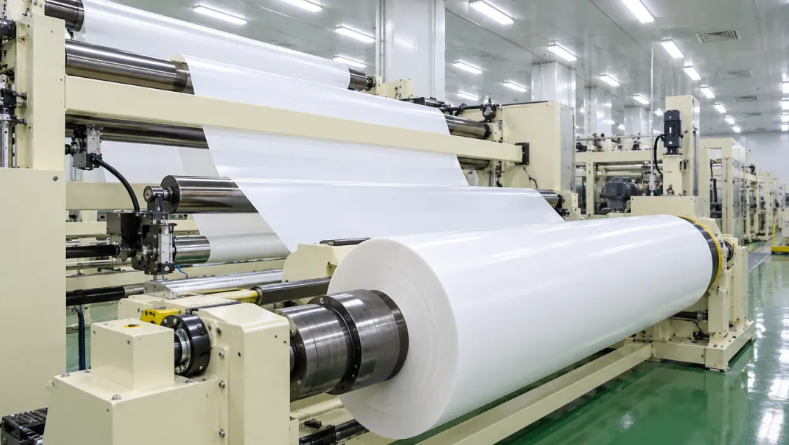
In lithium-ion battery separators, optical films, coated films, copper foil, and aluminum foil and other continuous-web production, length is a key factor across multiple stages—from unwinding, web feeding, coating, drying, slitting, and rewinding—and directly affects finished-roll length, material waste, and delivery management.
Yet in actual production, a common issue is that the length meter displays 1,000 m, but a remeasurement shows that the actual material length is less than 1,000 m.
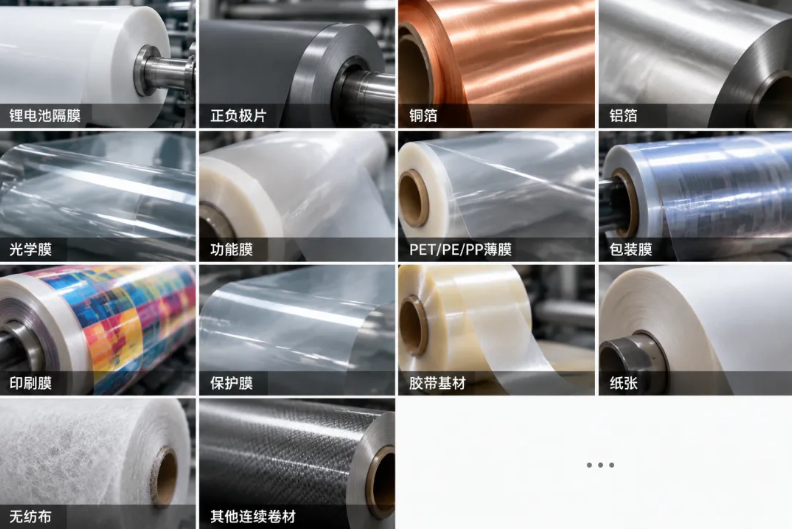
To avoid delivery disputes caused by under-length rolls, manufacturers often add an extra allowance beyond the target length. For film and foil manufacturers handling high-value materials in large volumes, adding just a few meters to each roll can translate into substantial material costs across an entire order.
Why does the material still come up short even when the meter says the target has been reached?
The issue may lie in the length-measurement method itself.
On many continuous-web production lines, traditional speed and length measurement is calculated indirectly from guide-roller rotation.
Specifically, a measuring wheel contacts the guide roller. An encoder records the rotational signals, and material length is calculated based on the configured roller diameter.
This method is well established and widely used, but actual measurement results can be affected by several factors:
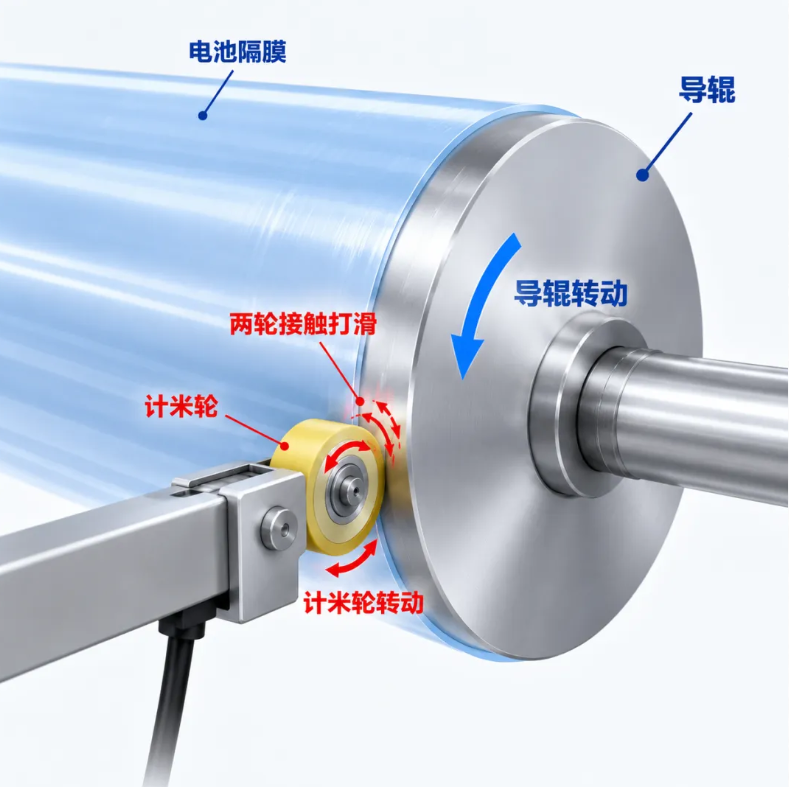
During startup, stopping, acceleration, deceleration, or changes in tension, the material may slide relative to the guide roller. The distance traveled by the roller may not equal the actual distance traveled by the material.
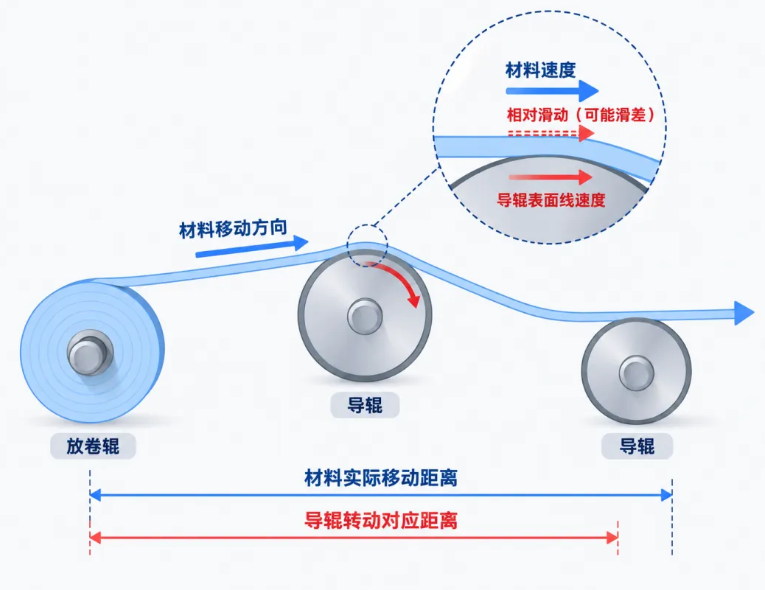
Slippage illustration
The measuring wheel records rotational signals generated by contact-driven transmission. If the two do not remain synchronized, the encoder's recorded revolutions may differ from the guide roller's actual rotation.
After prolonged operation, wear on the guide-roller surface or changes in its coating may alter its effective circumference. In some indirect measurement setups, failing to fully account for the effect of material thickness on its actual travel path may also cause conversion errors.
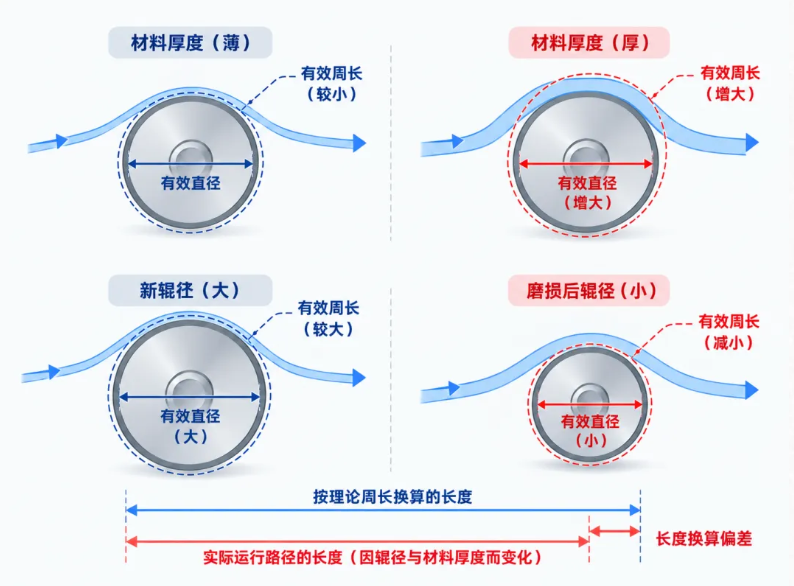
Taken together, these factors may lead to the following situation:
The encoder counts normally and the equipment continuously outputs length data, yet the calculated result still differs from the material's actual length.
For high-speed continuous-web lines with strict length requirements, estimating material length solely from roller rotation may not meet measurement needs under all operating conditions.
Can we reduce reliance on guide-roller rotation and mechanical transmission, and measure the movement of the material itself directly?
This is the technical approach behind DALA Measurement's DLS Series Laser Length Meter.
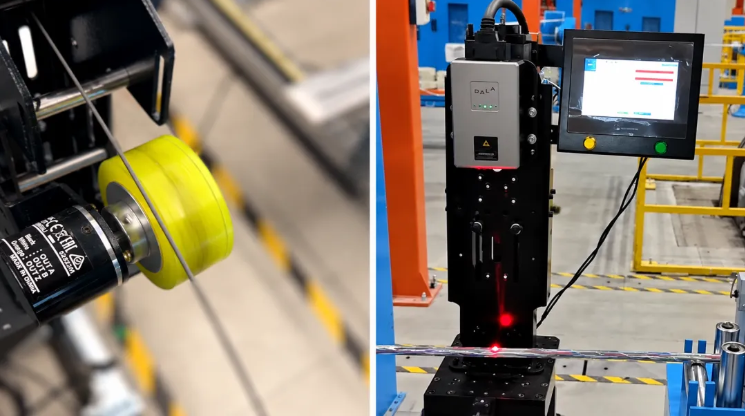
Left: Traditional encoder wheel | Right: DLS laser length meter
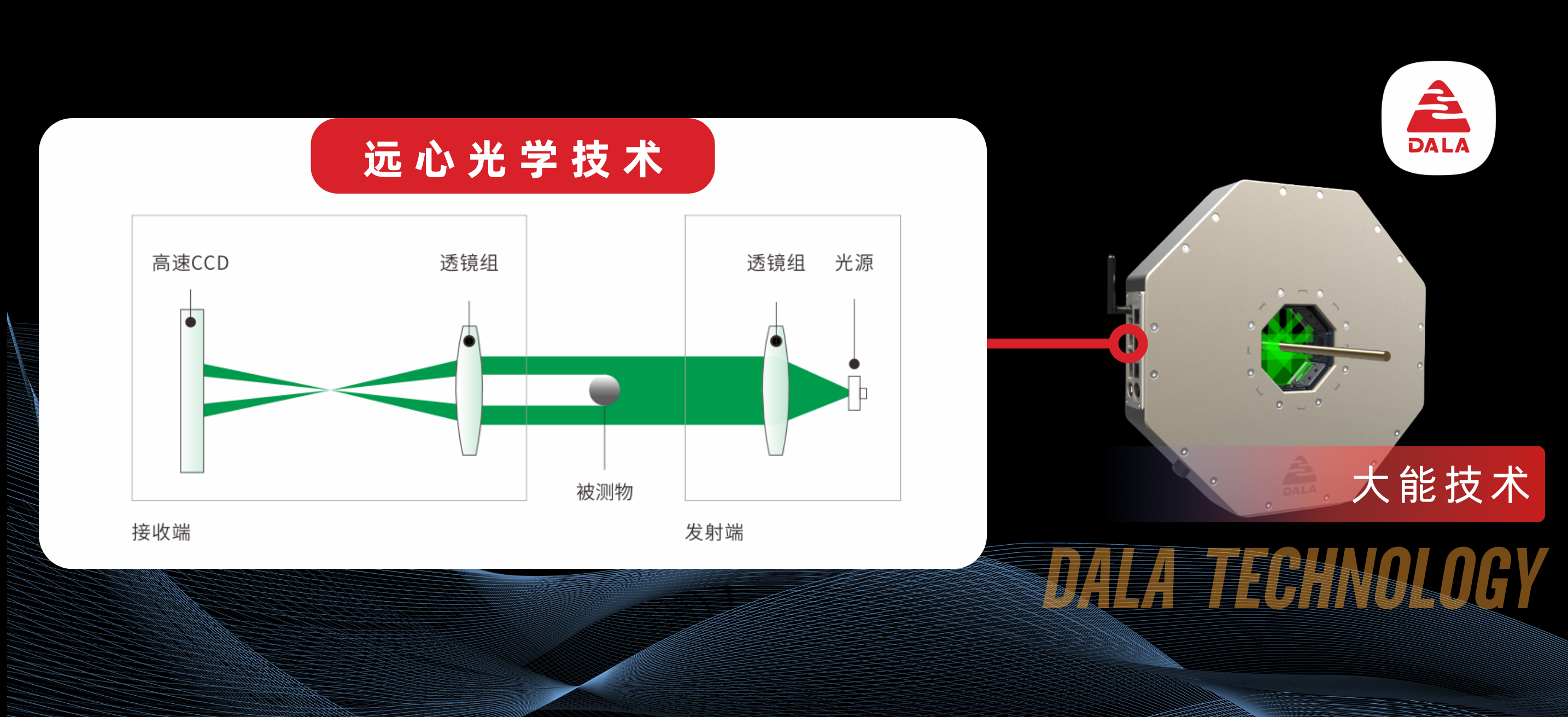
The DLS Series uses laser Doppler technology to determine the material's actual linear speed from optical signal changes caused by material movement, and continuously accumulates the length passing the measurement point: measurement accuracy up to ±0.05%, with repeatability up to ±0.02%
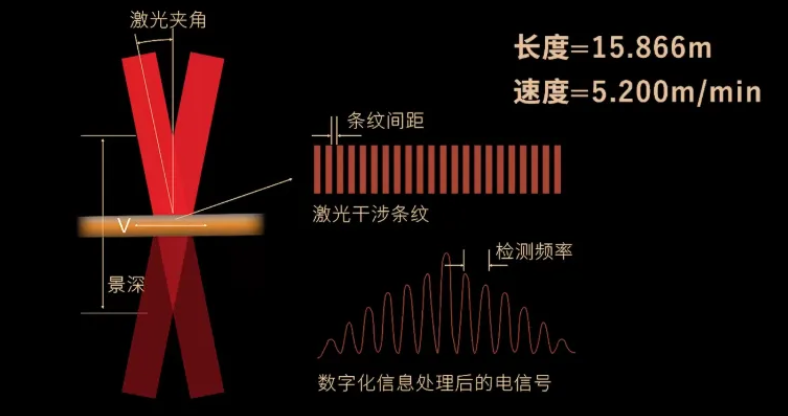
Laser Doppler speed and length measurement principle
DALA Measurement's laser length meter measures material motion directly, without relying on frictional transmission between the measuring wheel and guide roller to obtain length data. It can be used for:
Web length measurement on winders / rewinders
Web length measurement on calenders
Web length measurement on production equipment
Length tracking across the entire production line
Repeat-pattern length measurement for printed films
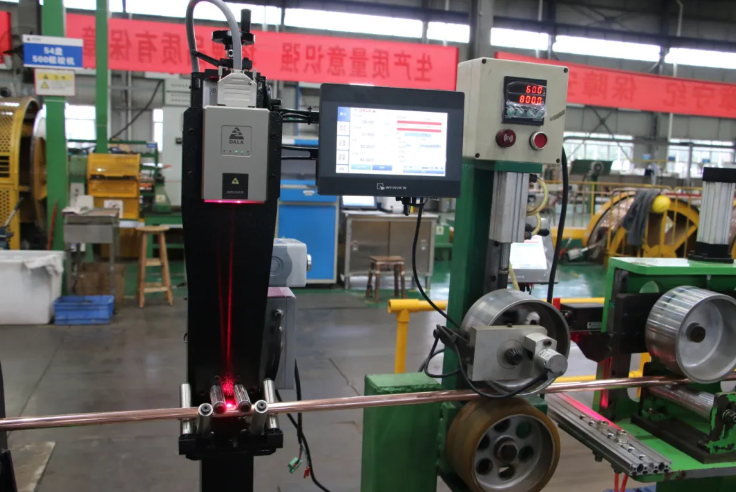
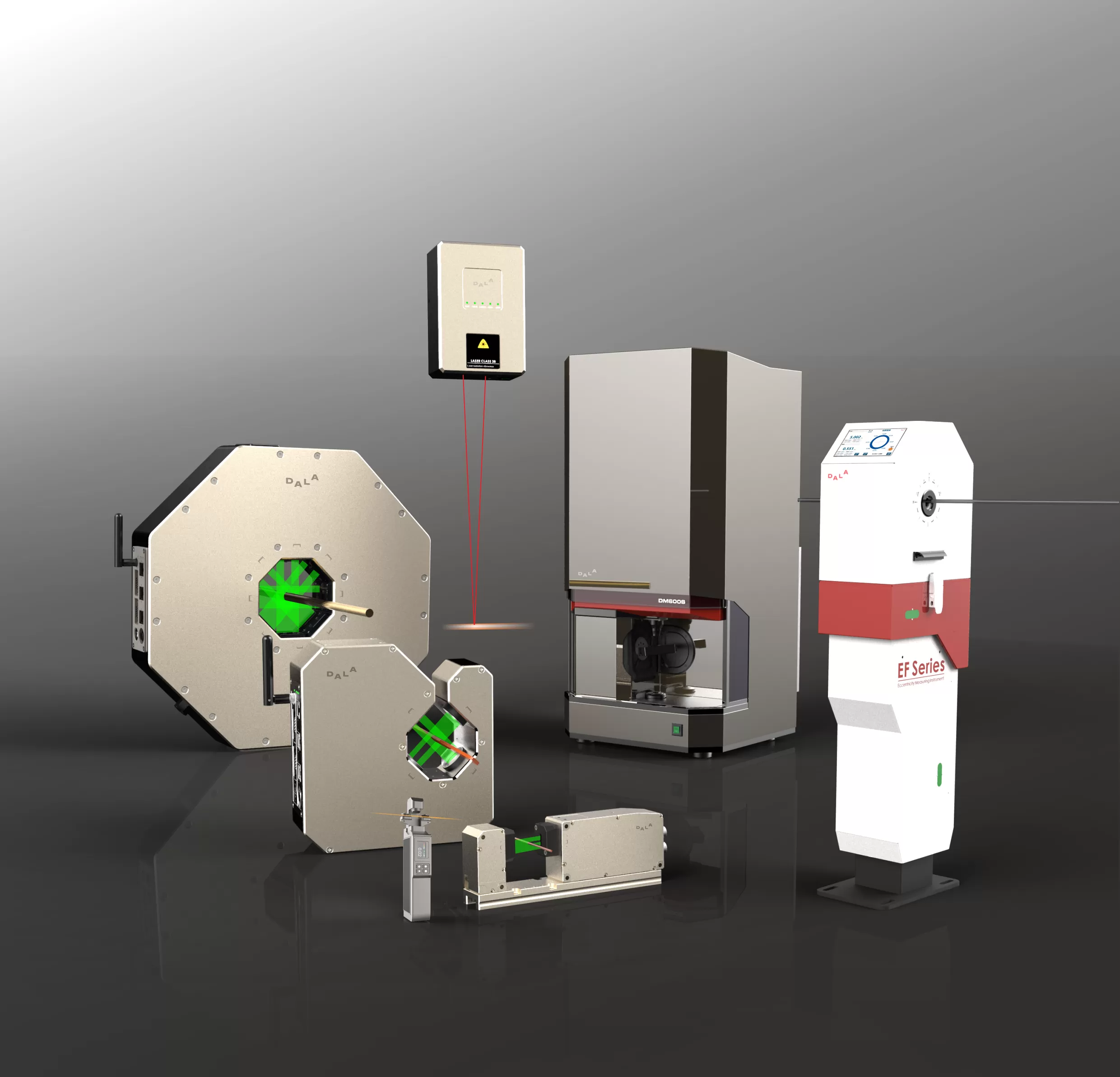
DLS laser length meter product photo
This brings several practical benefits:
Because length is not calculated from guide-roller revolutions, the effects of slippage between the material and guide roller, and between the measuring wheel and guide roller, can be reduced.
The measuring head does not need to contact the material and does not rely on continuous frictional transmission between the measuring wheel and guide roller, reducing related mechanical wear and maintenance requirements.
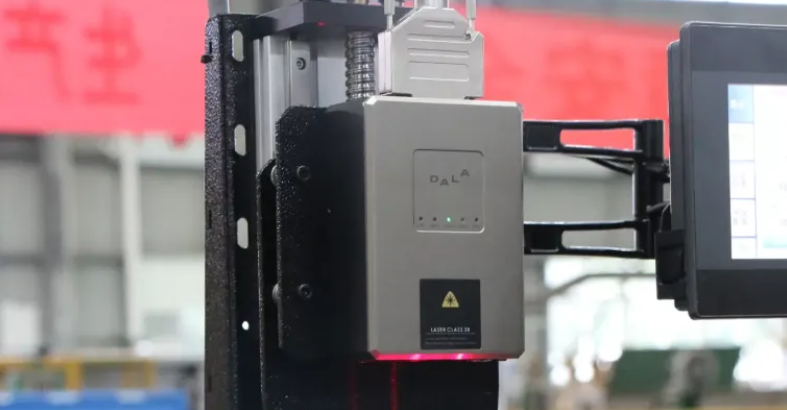
Non-contact, maintenance-free, and calibration-free
The device captures material speed in real time and continuously accumulates length, providing a basis for in-line length measurement, cut-to-length slitting, rewinding, and finished-roll length verification.
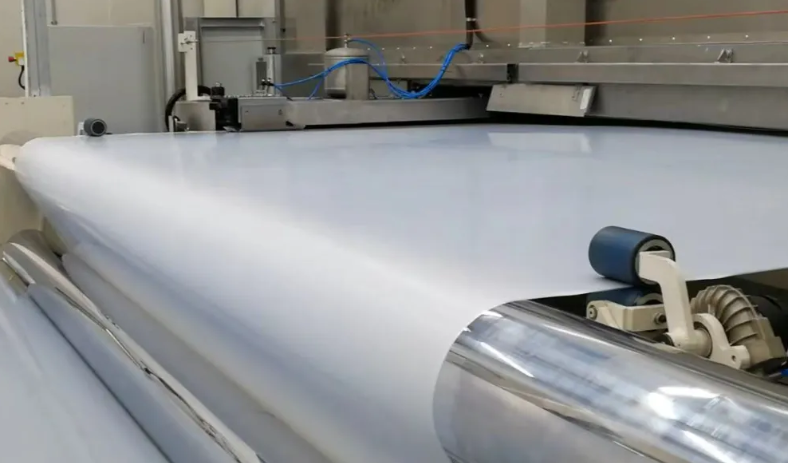
Separators require length control during winding, rewinding, and slitting, while damage such as holes, wrinkles, and creases must also be tightly controlled.
Non-contact measurement avoids adding a contact point between the measuring wheel and the material, reducing the risk of surface damage caused by additional contact and providing data for length control.
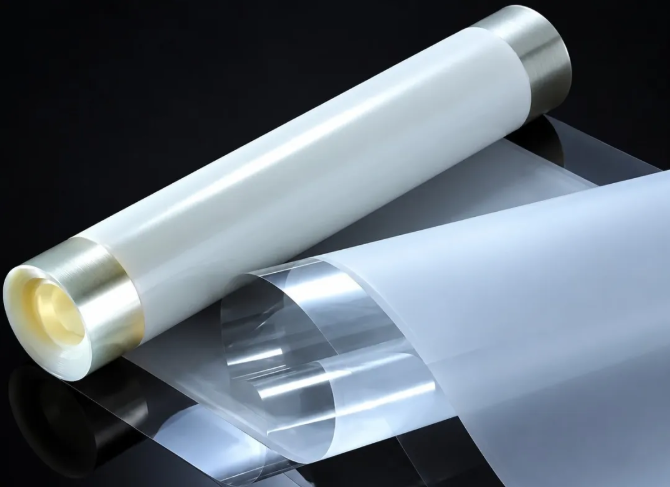
Transparent, smooth, or low-texture films have specific requirements for measurement methods and optical compatibility.
Directly measuring material speed during web feeding, coating, drying, and rewinding can support in-line length measurement, cut-to-length control, and speed matching between process stages.
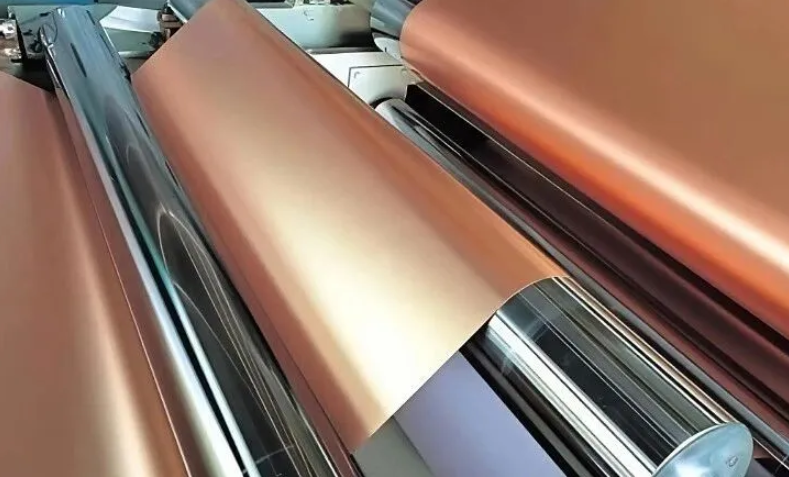
Foil surfaces are sensitive. Some production lines use freely rotating guide rollers for indirect length measurement to avoid direct contact between the measuring wheel and the material.
In addition to single-point length measurement, laser length meters can be installed at different positions as needed to compare speed or length data when analyzing material stretch or shrinkage before and after processing.
For manufacturers handling continuous-web materials such as battery separators, films, copper foil, and aluminum foil, traditional length-measurement methods remain suitable in many operating conditions.
However, when a production line is affected by slippage, roller-diameter changes, length-consistency requirements, or allowance-control issues, it is worth reassessing the measurement method.
DALA Measurement The DLS Series Laser Length Meter uses non-contact laser speed and length measurement to reduce reliance on mechanical transmission and provide in-line length measurement and speed monitoring for continuous-web production.
Guide rollers transport the material; the meter should record as accurately as possible how far the material has actually traveled.
Make length data more reliable, give allowance control a stronger basis, and make measurement truly serve continuous-web production.
Provides end-to-end support from product selection to production line operation through on-site guidance and after-sales technical support.